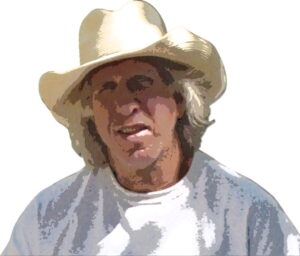
Before the West was None.
If you had asked me as a kid whether I’d someday own a Colorado ranch, I probably would have laughed.
I wasn’t raised on horseback. I was a military brat, growing up near Marine Corps bases instead of mountain ranges. My version of the American West came through a television screen—Roy Rogers after Saturday morning cartoons, The Rifleman, and later Bonanza. Like a lot of kids, I dreamed about wide-open spaces long before I ever stood in one.
Life had other plans.
My career eventually took me to New York City and into the fashion business, where I found myself wearing another interpretation of the West. Ralph Lauren had discovered what so many before him had—the American cowboy wasn’t simply a person; he was an idea. His denim shirts, western jackets, boots, and hats weren’t costumes. They celebrated independence, craftsmanship, and a way of life that seemed timeless. Somewhere along the way I collected my own Stetson, earned a custom cowboy buckle as District Manager of the Year with Chess King, and looked the part far better than I lived it.
Truth be told, I was still just a guy catching airplanes. For decades my office was somewhere around 33,000 feet.
As the founder of several frequent flyer concepts, I spent more time in airline lounges and hotel rooms than anywhere else. I loved the journey, but eventually something unexpected happened.
The mountains started calling.
One day I realized that after spending so much of my life traveling the world, what I really wanted was one place that never changed. A place where weekends meant dirt roads instead of departure boards.
The idea began simply enough. Buy a little mountain property.
Somewhere along the way that modest idea grew into a dream I called Dakota Storm—a ranch that existed only in notebooks, sketches, and imagination. Then I stumbled across a piece of Colorado that didn’t just catch my eye…
It caught my heart.
Bear Canyon Ranch wasn’t something I found. It felt more like something that found me.
From that moment, the dream changed. Rather than simply owning mountain property, I wanted to recreate the spirit of the great Western dude ranches I had admired for years. Not the commercial versions, but the feeling they created—a place where people unplugged, gathered around campfires, watched wildlife, and rediscovered the simple joy of being together.
Every weekend became another chapter. Building trails. Mitigating forests. Creating more memories. Designing places with names like the Western Star, the Retreat, Road House, Lazy Pines, and the 505 Trail. Each addition wasn’t about adding another attraction.It was about adding another memory waiting to happen.
Friends sometimes ask me why I put so much into the ranch. The answer is surprisingly simple. After years of spending weekdays in airports and behind computer screens, Bear Canyon Ranch became my balance. During the week I built travel companies. On weekends I became the caretaker of a place that reminded me why people travel in the first place. Not to escape life. But to reconnect with it. Today, the ranch remains exactly what I hoped it would become. A place to gather family. A place to welcome friends.
People sometimes ask if I consider myself a cowboy now. Not really. I’m simply someone who fell in love with the American West a little later than most. And every weekend, I still feel incredibly fortunate that it decided to love me back.